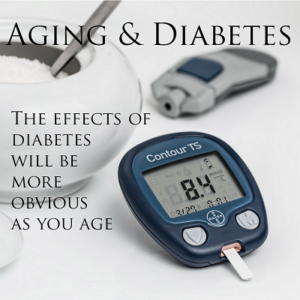
 Frequent urination, persistent thirst and lethargy are warning signs of diabetes. However, they are often seen as signs of just growing old too!
Many older individuals may remain undiagnosed diabetics for years (as they see their symptoms as just a part of growing old) until their diabetic symptoms become worse.
The problem is that irreparable but avoidable damage may have already occurred in some parts of the body. Accurate and early diagnosis of type two diabetes will be the greatest single factor in reducing the impact of its debilitating symptoms.
Here are some of the health issues that diabetics face, especially as they age:
Problems with Mobility
Physical activity is essential for maintaining optimal health, for diabetics it is especially so. Diabetic individuals who were more athletic when they were younger, could help control their blood glucose levels through regular exercise. However, as they get older, exercising regularly may not be quite as easy.
This means dietary indulgences that in the past might have partly mitigated by exercise, probably now more totally contribute to constantly elevated blood sugar levels. Over time, with reduced activity, this pre-diabetic condition will more likely develop into full-blown type two diabetes.
Overcoming Inertia
It can be challenging to change the sedentary behaviors of a lifetime and replace them with a regular and effective exercise routine. Any exercise program will cause discomfort initially. This must be overcome until the routine becomes a new and healthy habit. Learn the difference between discomfort and pain.
Any changes to exercise patterns should be made gradually. Start small and increase the effort as your fitness levels improve. Exertion should cause an increase in heart and breathing rates, but should not cause distress or undue fatigue.
Stop before this happens and set your sights lower to begin with. Ideally, an individualized exercise plan should be made with the help of a health care professional or fitness expert familiar with geriatric health.
Exercises that will prove to be the most beneficial for elderly diabetics include light weight training and walking. These can be undertaken with little equipment and the effort easily scaled to suit current fitness levels.
Aggravated Health Conditions
Many seniors may have bone and joint disorders, which can certainly hamper their ability to exercise.
Another problem for diabetics is that of having a higher risk of heart disease. It is recommended that an exercise stress test be taken before performing any strenuous exercise or physical activity.
Increased Risk of Fractures
Although fractures and the tendency to fall are high among the aged population, being diagnosed with diabetes can raise the risk even higher.
Diabetics may suffer from leg cramps due to excessive urination which causes the person to become dehydrated, but leg cramps can also be a sign of damage to the nerves known as ‘diabetic neuropathy’. This is caused from blood sugar levels being persistently too high.
Diabetic symptoms – the shakiness, imbalance, lack of co-ordination and weakness, all increase their likelihood of falling and suffering bone fractures.
Drug Interactions
Diabetics are usually prescribed more than just one type of medicine, especially aging patients. They may need to take several medications to be able to manage their multiple medical conditions.
As a result, their risk of experiencing side effects and adverse drug interactions are also higher. It is vitally important that any unanticipated symptoms are immediately reported to the doctor and/or pharmacist.
Being diabetic, regardless of age, is not easy. Advancing age will of course add another layer of difficulty. However, mindful and determined effort by the patient, under the guidance of health professionals, can greatly reduce the impact of diabetic symptoms and enhance quality of life.